Lower Back Pain at L4/L5/S1: Causes, Muscle Tension, and How Sports Massage & Physical Therapy Can Help
Lower back pain is one of the most common musculoskeletal complaints worldwide, affecting people of all ages and activity levels. A large proportion of this discomfort originates around the lower lumbar spine, particularly the L4/L5 and L5/S1 segments. These joints are subjected to significant mechanical stress during daily activities such as prolonged sitting, sports activity, heavy lifting, frequent bending and long distance walking. When movement at these spinal segments becomes restricted or “locked up,” pain, stiffness and surrounding muscle tension can develop.
Understanding the L4/L5/S1 Region
The lumbar spine consists of five vertebrae labelled L1 to L5, with the sacrum sitting directly below. The L4/L5 and L5/S1 joints are located at the bottom of the lumbar spine and are responsible for absorbing large amounts of compressive and rotational force (1). Because these joints bear substantial load, they are particularly vulnerable to dysfunction and degeneration.
When these spinal joints become heavily restricted, normal movement patterns are altered. Joint stiffness can increase pressure on surrounding tissues, including ligaments, discs, and muscles. This restriction is often described clinically as a hypomobile or “locked” joint segment. As a protective response, nearby muscles such as the erector spinae, quadratus lumborum, gluteals, and piriformis may tighten excessively in an attempt to stabilise the area (4).
This muscular guarding frequently contributes to persistent aching, reduced mobility, and difficulty with movements such as bending forward, standing upright, or rotating the trunk.
The Role of Weak Core and Gluteal Muscles
Weakness in the core and buttock muscles is strongly associated with lower back dysfunction. The deep abdominal muscles, multifidus, pelvic floor, and gluteal muscles work together to stabilise the lumbar spine and pelvis during movement (7).
When these muscles are weak or underactive, the lumbar spine often compensates by overusing superficial muscles in the lower back. This increases strain on the L4/L5/S1 segments and can contribute to chronic muscle tightness and joint restriction.
Weak gluteal muscles, particularly the gluteus maximus and gluteus medius, may also alter pelvic alignment and movement mechanics. This can increase stress through the lumbar spine during walking, running, lifting, and prolonged standing (5).
Increased Lumbar Lordosis and Prolonged Sitting
Another common contributor to lower back pain is excessive lumbar lordosis, which refers to an exaggerated inward curve of the lower spine. Increased lordosis can place greater compressive forces on the posterior elements of the lumbar spine, especially at L4/L5 and L5/S1 (6).
Poor posture, prolonged sitting, and muscular imbalances are major factors associated with excessive lordosis. Sitting for long periods can shorten the hip flexors while weakening the gluteal and core muscles. Over time, this imbalance may tilt the pelvis forward, increasing lumbar curvature and stress on the lower back joints.
In addition, prolonged sitting reduces movement variability and circulation around the lumbar spine. Remaining in static postures for extended periods can increase stiffness in the joints and surrounding tissues, contributing to discomfort and reduced mobility (2).
How Sports Massage Can Help
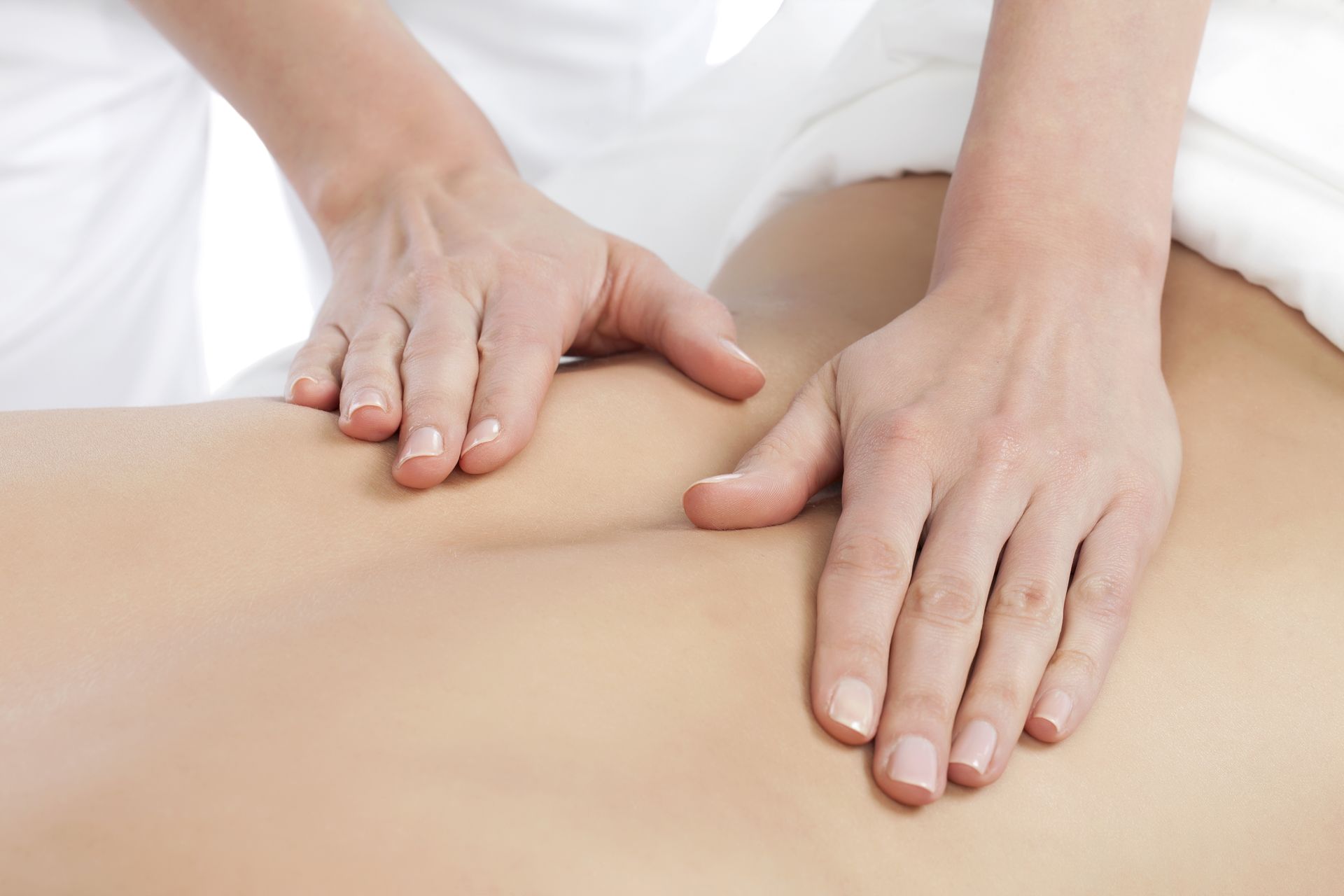
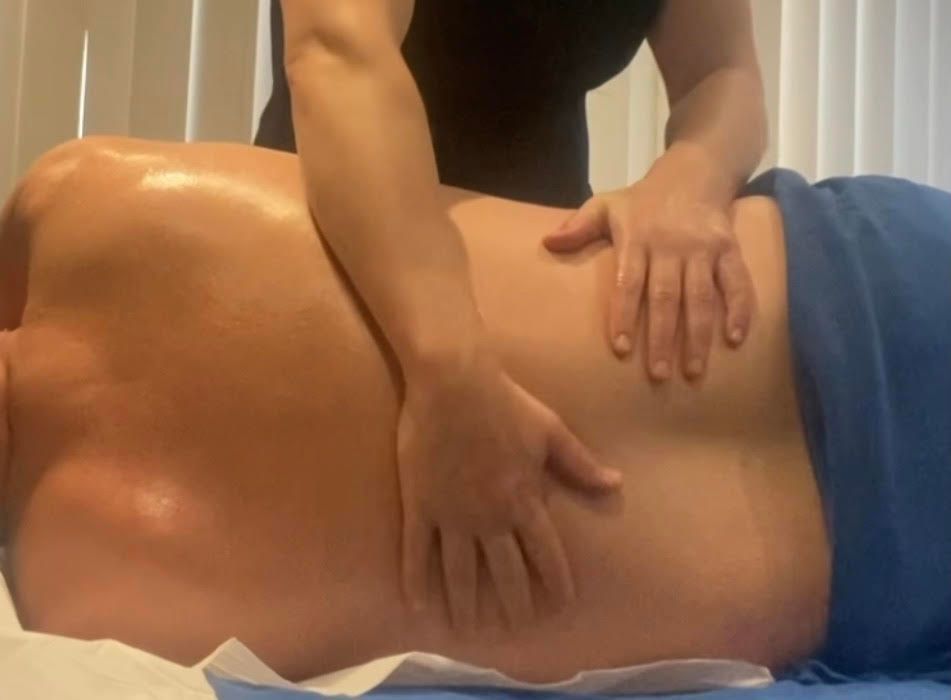
Sports massage can play an important role in reducing lower back pain associated with muscular tension and joint restriction. Tight muscles surrounding the lumbar spine and buttocks can create additional compression and pulling forces around the affected spinal segments.
Massage therapy helps by:
- Reducing muscle tension and spasm in the lumbar erectors, quadratus lumborum, gluteals, and piriformis
- Improving local blood circulation and tissue oxygenation
- Enhancing flexibility and soft tissue mobility
- Reducing pain sensitivity and promoting relaxation
By decreasing excessive muscular guarding around the L4/L5/S1 region, sports massage may help restore more normal movement patterns and reduce mechanical stress on the joints (8).
How Physical Therapy Can Help
Physical therapy aims to address both the symptoms and underlying causes of lower back pain. Treatment often includes a combination of manual therapy, mobility work, strengthening exercises, and postural correction.
Manual therapy techniques may help improve movement at restricted lumbar segments and reduce stiffness. Exercise rehabilitation is particularly important for strengthening the deep core muscles and gluteals, which provide long-term spinal support.
A physical therapist may also focus on:
- Improving lumbar and pelvic mobility
- Strengthening the abdominal and gluteal muscles
- Correcting posture and movement mechanics
- Stretching tight hip flexors and lower back muscles
- Educating patients on sitting posture and activity modification
Research shows that exercise therapy and targeted rehabilitation are highly effective in managing chronic lower back pain and improving function (3).
Conclusion
Lower back pain around the L4/L5/S1 region is commonly associated with joint restriction, surrounding muscle tension, weak core and gluteal muscles, increased lumbar lordosis, and prolonged sitting. When the lumbar joints become restricted, nearby muscles often tighten protectively, contributing to pain and stiffness.
Sports massage and physical therapy can work together effectively to reduce muscular tension, improve joint mobility, strengthen stabilising muscles, and restore healthy movement patterns. Addressing both muscular and biomechanical factors is essential for achieving long-term relief and preventing recurrent lower back pain.
References (Harvard Referencing System)
- Bogduk, N. (2012) Clinical Anatomy of the Lumbar Spine and Sacrum. 5th edn. Edinburgh: Elsevier.
- Caneiro, J.P., O’Sullivan, P., Smith, A., Moseley, G.L., Lipp, O.V., Hodges, P.W. and McAuley, J.H. (2021) ‘How does change unfold? An evaluation of the process of change in four people with chronic low back pain and elevated negative affectivity managed with cognitive functional therapy’, British Journal of Sports Medicine, 55(9), pp. 486–493.
- Hayden, J.A., Ellis, J., Ogilvie, R., Stewart, S.A. and Bagg, M.K. (2021) ‘Exercise therapy for chronic low back pain’, Cochrane Database of Systematic Reviews, 9(9).
- Kisner, C. and Colby, L.A. (2017) Therapeutic Exercise: Foundations and Techniques. 7th edn. Philadelphia: F.A. Davis Company.
- McGill, S. (2016) Low Back Disorders: Evidence-Based Prevention and Rehabilitation. 3rd edn. Champaign, IL: Human Kinetics.
- Neumann, D.A. (2017) Kinesiology of the Musculoskeletal System: Foundations for Rehabilitation. 3rd edn. St. Louis: Elsevier.
- Richardson, C., Hodges, P.W. and Hides, J. (2004) Therapeutic Exercise for Lumbopelvic Stabilization. 2nd edn. Edinburgh: Churchill Livingstone.
- Weerapong, P., Hume, P.A. and Kolt, G.S. (2005) ‘The mechanisms of massage and effects on performance, muscle recovery and injury prevention’, Sports Medicine, 35(3), pp. 235–256.