
Neck Nerve Aggravation, Hand
Tingling and the Radial Nerve
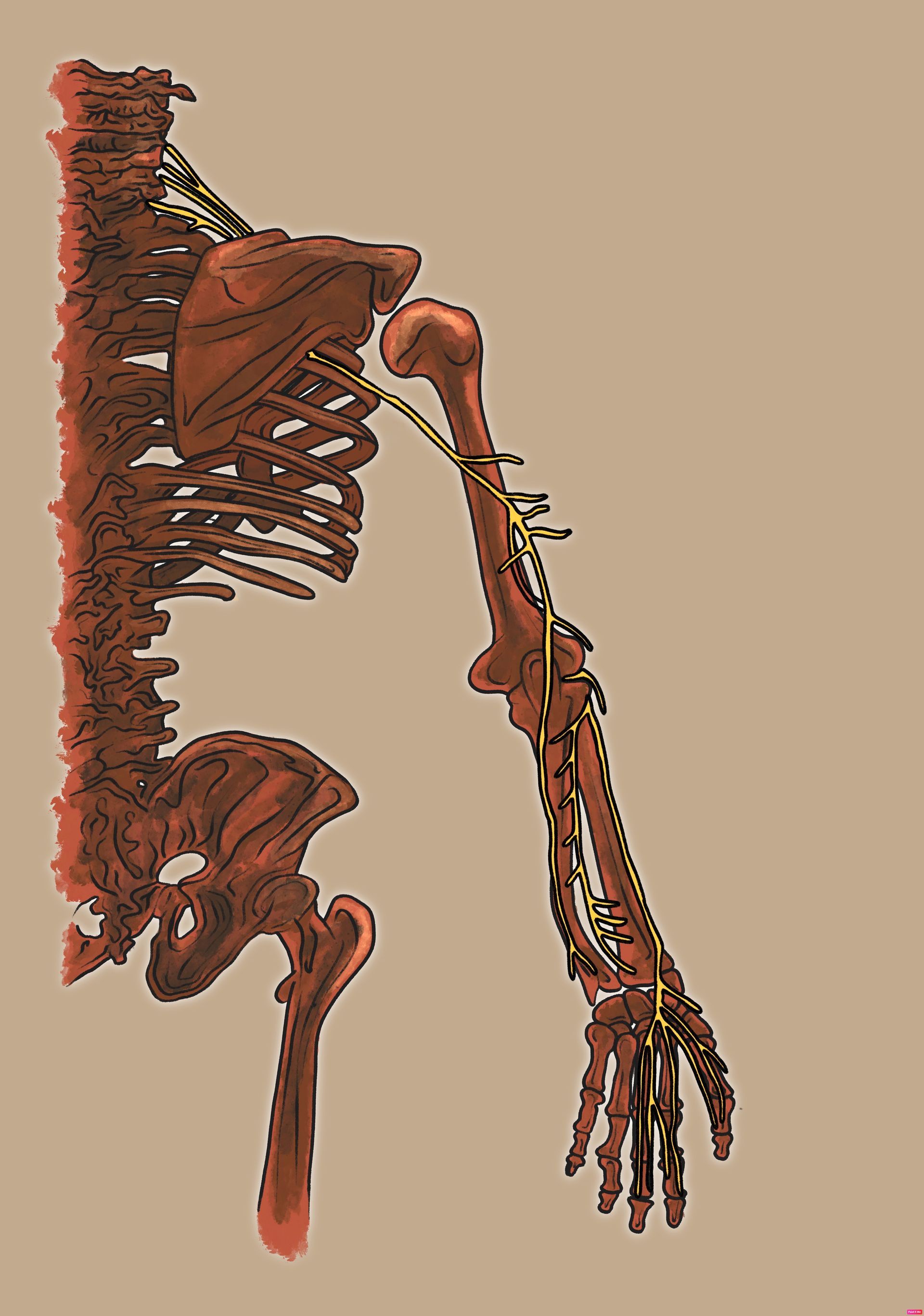
Why Can Neck Problems Cause Tingling In The Hands?
Tingling, pins and needles, numbness or altered sensation in the hands and fingers can sometimes begin in the neck. The nerves supplying the arm and hand originate from the cervical spine before travelling through the shoulder, arm and into the hand.
When a nerve root becomes inflamed, aggravated or compressed near the neck, it is often called
cervical radiculopathy. Symptoms may include neck pain, pain travelling into the shoulder or arm, pins and needles, numbness, reduced grip strength or weakness in certain arm and hand movements. The precise pattern of symptoms can help indicate which nerve root may be involved. For example, C6 symptoms may travel towards the thumb and index finger, C7 towards the middle finger and C8 towards the ring and little fingers [1][2].
Causes of Nerve Aggravation In The Neck
There are several possible causes of cervical nerve symptoms. Trauma, including a fall, sporting impact or road-traffic collision, may aggravate the joints, discs, muscles and ligaments around the cervical spine. Whiplash may lead to neck pain, stiffness and protective muscle spasm, and some people may also develop arm symptoms associated with a cervical nerve root.
Repetitive work, prolonged driving, sustained phone or computer use and poor postural habits may increase loading through the neck and upper back. These factors do not automatically compress a nerve, but they may contribute to neck pain, muscular tension and reduced movement. Reduced strength and endurance of the neck and shoulder muscles may also affect postural control during prolonged or repetitive activity.
Disc herniation, cervical spondylosis and trauma are recognised causes of cervical radiculopathy. However, many episodes arise without a specific injury or obvious trigger [1][2][3].
Degeneration and Nerve Compression
Degenerative changes can also play a part. Osteoarthritis, disc wear and reduced disc height may narrow the openings through which the cervical nerve roots leave the spine. This is known as foraminal narrowing.
A disc bulge or prolapse may also place mechanical pressure on a nerve root and trigger a local inflammatory response. This may lead to neck pain, pain into the shoulder or arm, altered sensation, weakness or changes in reflexes. Degenerative changes are common with age, but their presence on a scan does not always explain a person’s symptoms; clinical assessment remains important [1][2].
The Radial Nerve: Origin and Anatomy
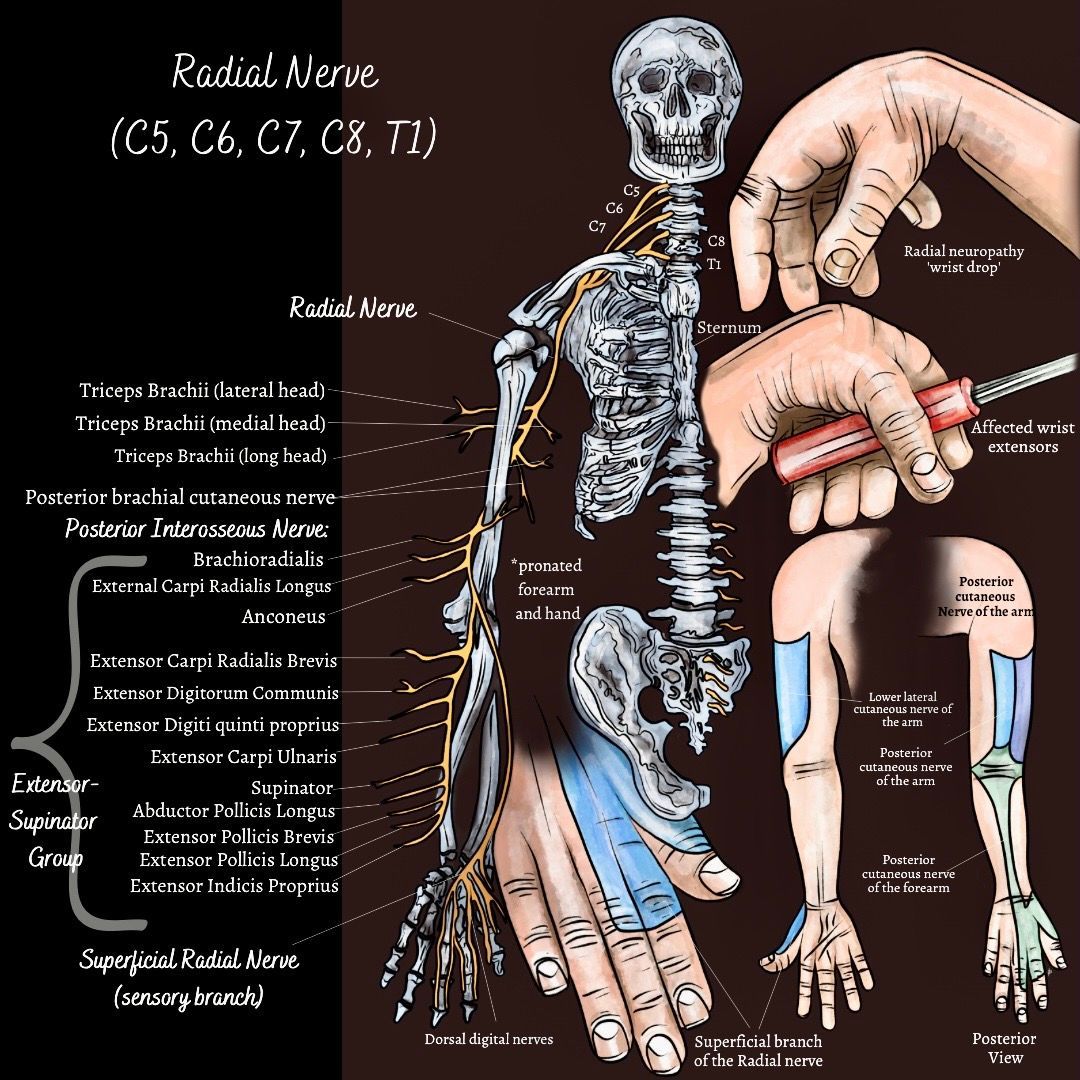
The radial nerve is one of the main nerves of the upper limb. It arises from the brachial plexus, mainly from nerve roots C5 to T1, through the posterior cord.
It travels from the armpit into the back of the upper arm, running closely alongside the humerus in the radial groove. It then passes around the outside of the elbow and divides into branches in the forearm. Its deep branch mainly supplies muscles that straighten the wrist, fingers and thumb, while its superficial branch provides sensation to part of the back of the hand. [4]
Because the radial nerve travels through several vulnerable areas, symptoms may arise from the neck, shoulder region, upper arm, elbow or forearm. A cervical nerve-root problem and radial-nerve compression lower down the arm are different conditions, although they can sometimes cause overlapping symptoms [4].
Where is Radial-Nerve Sensation Felt?
The radial nerve mainly provides sensation to the back of the thumb-side of the hand. This includes the back of the thumb, the first web space between the thumb and index finger, and part of the back of the index, middle and ring fingers.
The fingertips are not typically supplied by the radial nerve. The first web space on the back of the hand is therefore a useful area when assessing radial-nerve sensation [4].
How May Neck Symptoms Affect Radial-Nerve Function?
A problem affecting the C6 or C7 nerve roots in the neck may produce symptoms that overlap with radial-nerve function. This can include pain from the neck into the shoulder, outer arm or forearm, altered sensation towards the thumb, index or middle finger, and weakness when straightening the wrist or fingers [1][2].
Radial-nerve compression lower down the arm may occur through direct trauma, pressure against the upper arm, repetitive forearm activity, or compression around the elbow. More significant radial-nerve dysfunction can cause difficulty lifting the wrist and fingers, sometimes known as wrist drop [4].
When to Seek Medical Assessment
New or worsening numbness, persistent pins and needles, loss of hand strength, dropping objects, severe neck pain after trauma, changes in balance or walking, or symptoms affecting both arms should be assessed promptly.
Urgent medical attention is needed if symptoms are sudden, rapidly worsening, or occur with facial weakness, speech difficulty, severe headache, or bowel or bladder changes.
A thorough assessment can examine the neck, shoulder, arm, reflexes, strength and sensory pattern to help establish whether symptoms are more likely to arise from the neck, a peripheral nerve, or another cause.
References
[1] Caridi, J.M., Pumberger, M. and Hughes, A.P. (2011) ‘Cervical radiculopathy: A review’, HSS Journal, 7(3), pp.
[2] Iyer, S. and Kim, H.J. (2016) ‘Cervical radiculopathy’, Current Reviews in Musculoskeletal Medicine, 9(3), pp. 272–280.
[3] Radhakrishnan, K., Litchy, W.J., O’Fallon, W.M. and Kurland, L.T. (1994) ‘Epidemiology of cervical radiculopathy: A population-based study from Rochester, Minnesota, 1976 through 1990’, Brain, 117(2), pp. 325–335.
[4] Węgiel, A., Karauda, P., Zielinska, N. and Tubbs, R.S. (2023) ‘Radial nerve compression: Anatomical perspective and clinical consequences’, Neurosurgical Review, 46, 53.