Five Ways That Sports Massage of the Abdomen Can Help Lower Back Pain
Possible Mechanisms: How Abdominal Massage Might Help With Lower Back Pain and Sciatica
Lower back pain (LBP) and sciatica (pain radiating along the sciatic nerve, often due to nerve root compression or irritation) are common, debilitating conditions. Though treatments often focus on the spine, hips, glutes, and hamstrings, there is increasing interest in approaches that include the abdominal region - especially abdominal massage and core strength workouts to help with lower back muscle stability. This post will discuss how massaging the abdomen might help, what evidence supports those ideas.
1.Reduce Muscular Tension & Improving Core Muscle strength and Function.
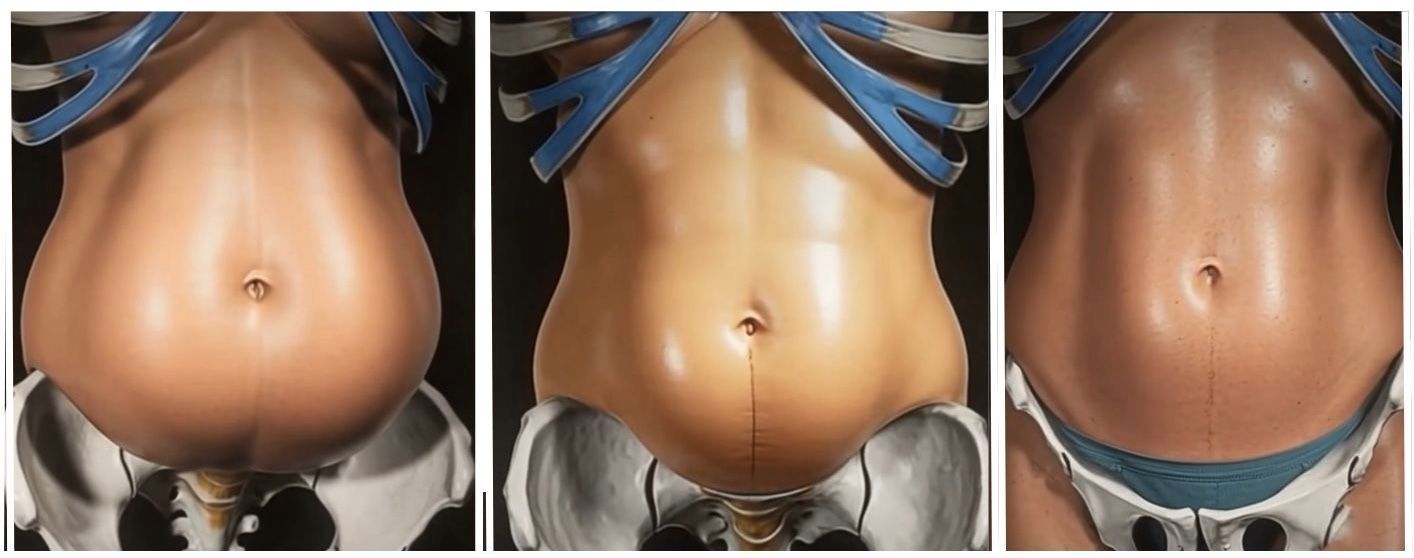
The core is not just the abdomen; it’s a system that includes the abdominal muscles, the diaphragm, the pelvic floor and the muscles of the lower back. If abdominal muscles are tight, weak, or poorly coordinated, the lower back may take up extra load and contribute to pain. Abdominal massage might help by loosening tense abdominals and surrounding hip flexors, encourage better muscular balance and thereby reduce stress on neighbouring lumbar structures.
2. Improve Overall Back Posture & Spinal Stability
If the abdominal wall is stiff or if there is poor abdominal control, the spine and pelvis may be held in suboptimal positions, further aggravating nerve roots or structures related to sciatica. Massaging the abdomen could help increase mobility in the abdominal fascia and connective tissues, improve alignment, and facilitate better posture - which in turn might relieve pressure on the sciatic nerve roots.
3. Loosen Fascia & Myofascial Connective Tissue System
The myofascial connective tissue spans between abdominal, pelvic, and back regions; restrictions or adhesions in fascia (from injury, posture, or surgery) can contribute to pain referral patterns. Abdominal massage might help improve fascial “gliding” or reduce adhesions, which could reduce irritative stress on nerves or reduce compensatory overuse of certain muscles. Evidence from studies using roller massage on the lower back suggests improved fascia gliding and lumbar flexibility, along with increased abdominal trunk muscle strength.
4. Reduce Bloating, Abdominal Distension & Visceral Pressure
Sometimes visceral factors (e.g. bloating, constipation) can increase intra-abdominal pressure or distension, which can alter posture (forward pelvic tilt, increased lumbar lordosis) or place indirect stress on the lower back. Massage of the abdomen helps relieve distension, improve digestion and alleviate discomfort, which may indirectly reduce lower back strain. Evidence shows that abdominal massage can reduce distension and improve bowel function in various populations (1, 2).
5. Promote Relaxation & Decreasing Nervous System Irritability
Massage (in general) promotes parasympathetic activation, reduces stress, may decrease inflammatory mediators and increases local blood flow. That helps reduce muscle guarding and nervous system hypersensitivity, which are often components of both chronic low back pain and sciatica. Though direct studies of abdominal massage for sciatica are few, general massage is known to help with low back pain in the short term.
Previous Research
A controlled trial by Zhang et al. (2014) investigated whether adding core stability exercises to Chinese massage improved outcomes in people with nonspecific lower back pain. Ninety-two participants were assigned either to massage plus core exercises or massage alone. Pain (VAS) and disability (ODI) were measured over the 8-week treatment period. The group receiving the combined approach showed significantly greater reductions in both pain and disability compared with massage alone, indicating that integrating core stability exercise training enhances the effectiveness of massage for nonspecific lower back pain (3).
Self-myofascial release (e.g. using rollers) in the lower back has been shown to improve fascia gliding, lumbar flexibility, and abdominal trunk strength. These improvements in flexibility and strength could reduce mechanical stress on the spine and contribute to reducing symptoms of back pain.
Abdominal massage shows promise as a complementary therapy for lower back pain and possibly sciatica, via mechanisms like relieving abdominal tension, improving core stability, reducing visceral distension, improving fascial mobility, and promoting relaxation. However, while there is some supportive evidence (especially in non-specific low back pain and for improving abdominal/gastrointestinal symptoms), there is as yet limited direct evidence for its use specifically for sciatica caused by nerve root compression or disc issues.
For someone with sciatica or lower back pain, abdominal massage might be useful as part of a wider program: massage (including abdominal and myofascial work), core stability exercises, posture correction, stretching, perhaps physiotherapy. If trying abdominal massage for the first time, gently, avoid pressure over sites of acute pain or inflammation, and ideally under guidance of a health professional.
Light Abdominal Massage Demonstration & Simple Core Exercises:
References:
- Huang S-Y, Chiao C-Y, Chien L-Y. (2025) “Effectiveness of abdominal massage on chronic constipation in adults: A systematic review and meta-analysis.” International Journal of Nursing Studies; 161: 104936.
- Lin Z, Wang D, Fei X, Han D, Liu Z. (2025) “Effect of abdominal massage on constipation: A systematic review and meta-analysis of randomized controlled studies.” Complementary Medicine Research. 2025. doi:10.1159/000548699.
- Zhang, Y., Tang, S., Chen, G., & Liu, Y. (2014). Chinese massage Combined with Core Stability Exercises for Nonspecific Low Back Pain: A Randomised Controlled Trial. Complementary Therapies in Medicine, 22 (3), 495–500.