
Dowager’s Hump & Neck Pain: Causes,
Symptoms, Treatment & Prevention
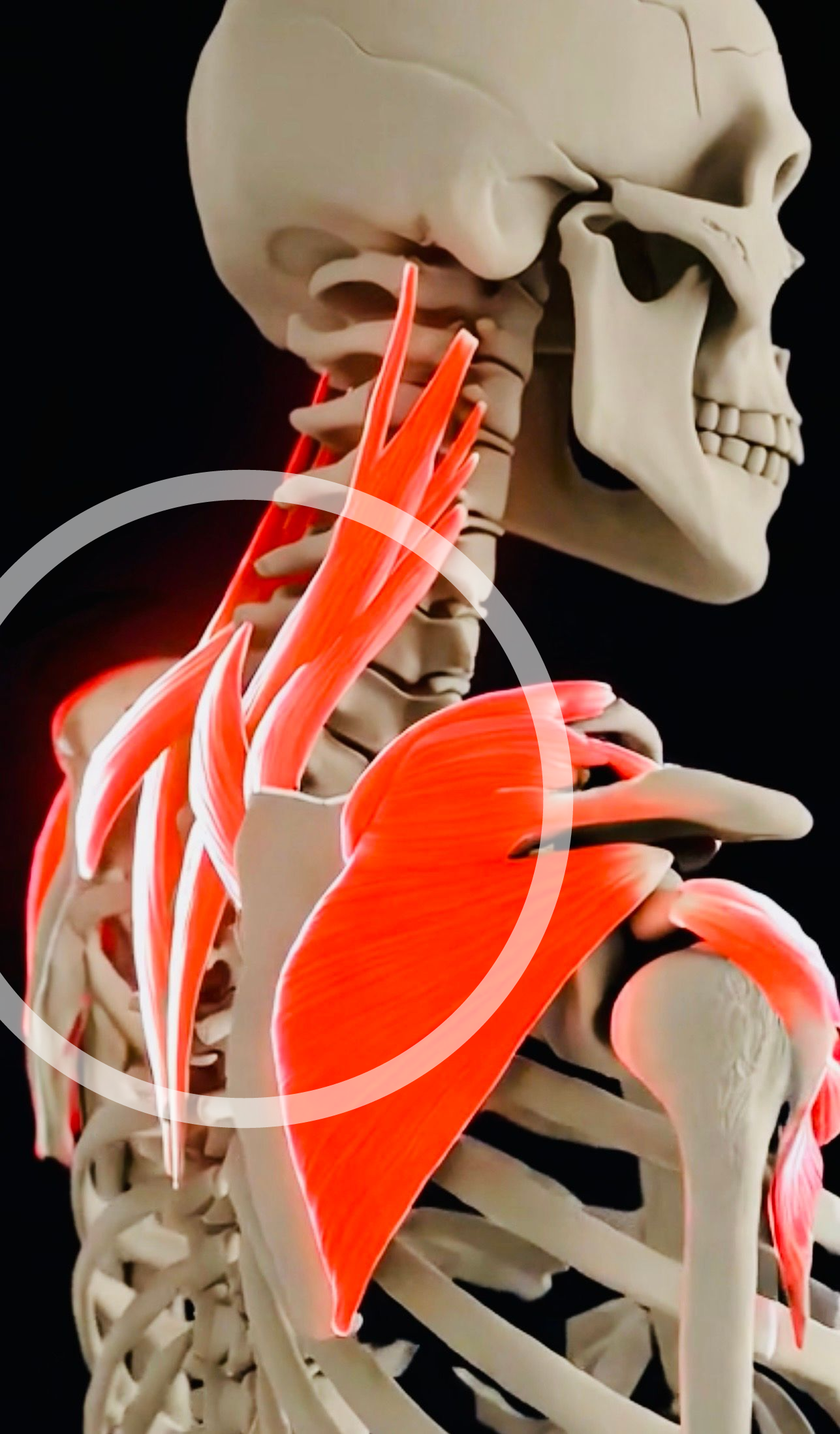
Dowager’s hump, medically referred to as thoracic kyphosis or postural kyphosis, is an excessive forward curvature of the upper thoracic spine that creates a visible hump-like appearance at the base of the neck (1). Although commonly associated with ageing, it is increasingly prevalent in younger adults due to sedentary lifestyles, prolonged computer use, and poor posture habits (10).
In many cases, dowager’s hump develops gradually over time and is heavily influenced by muscular imbalance, spinal loading, and prolonged postural stress (6).
The Pathology Behind Dowager’s Hump
The thoracic spine naturally possesses a mild kyphotic curve. However, when this curve becomes exaggerated, the head migrates forward and the shoulders round inward. Over time, the body adapts to this abnormal position, leading to progressive postural dysfunction (7).
One of the primary contributors to dowager’s hump is prolonged poor posture, particularly during desk-bound work. Sitting for extended periods while leaning over computers, laptops, or mobile devices places excessive stress upon the cervical and thoracic spine (10).
As forward head posture develops, the mechanical load placed upon the cervical spine significantly increases. This prolonged strain can alter joint mechanics, muscle activation patterns, and fascial tension (6).
Over time, these postural adaptations may contribute to:
- Joint stiffness
- Reduced spinal mobility
- Muscular imbalance
- Increased compressive spinal forces
- Soft tissue tightness
- Weakness of postural stabilisers
Muscles Commonly Affected
Dowager’s hump is strongly associated with tension and dysfunction within several muscles surrounding the neck and upper back (8).
Commonly overactive and tight muscles include:
- Levator scapulae
- Scalenes
- Upper trapezius
- Cervical erector spinae
These muscles often become chronically shortened due to sustained forward head posture and rounded shoulders (6).
At the same time, stabilising muscles may weaken, including:
- Deep cervical flexors
- Lower trapezius
- Rhomboids
- Thoracic extensors
Research has demonstrated that individuals with neck pain frequently exhibit reduced activation of the deep cervical flexor muscles, contributing to poor cervical stability and postural dysfunction (3).
Can Dowager’s Hump Lead to Osteoarthritis?
Chronic poor posture and abnormal spinal loading may contribute to degenerative joint changes over time. When joints are repeatedly subjected to excessive mechanical stress, cartilage wear and osteoarthritic changes can develop (7).
Although posture alone is not the sole cause of osteoarthritis (OA), prolonged forward head posture and thoracic kyphosis may accelerate degenerative processes within the cervical and thoracic spine (2).
This may result in:
- Chronic stiffness
- Reduced mobility
- Joint pain
- Degenerative disc changes
- Nerve irritation
Early intervention is important to reduce ongoing stress on spinal structures.
Tension Headaches and Neck Pain
Many individuals with dowager’s hump experience chronic neck tension and tension-type headaches. Tightness within the upper trapezius, scalenes, suboccipital muscles, and cervical erector spinae can refer pain into the head, temples, and behind the eyes (4).
Sustained muscular contraction may also increase pain sensitivity and reduce local circulation, contributing to persistent discomfort (8).
Symptoms may include:
- Headaches originating from the neck
- Tightness across the shoulders
- Pain at the base of the skull
- Reduced neck mobility
- Fatigue when sitting upright
Can Dowager’s Hump Be Prevented?
In many cases, yes. Regular movement, exercise, and postural awareness can significantly reduce the likelihood of developing postural kyphosis (9). Individuals performing desk-bound jobs should aim to:
- Take regular movement breaks
- Improve workstation ergonomics
- Strengthen postural muscles
- Avoid prolonged forward head posture
- Maintain thoracic mobility
Exercise remains one of the most effective preventative strategies (9).
Can Dowager’s Hump Be Reversed?
In my experience, and research backs this up, postural dowager’s hump can often be significantly improved and in some cases largely reversed via targeted exercises and rehabilitation (8). Earlier intervention typically produces better outcomes; however, improvements may still occur even in chronic cases.
Mobility Exercises
Mobility exercises help restore movement through stiff thoracic and cervical spinal segments (2).
Examples include:
- Thoracic extension exercises
- Cat-camel mobility drills
- Foam roller thoracic mobilisation
- Cervical mobility exercises
Stretching Exercises
Stretching can reduce tension within shortened muscles such as the upper trapezius, levator scapulae, and scalenes (6).
Common stretches include:
- Upper trapezius stretches
- Levator scapulae stretches
- Scalene stretches
- Pectoral stretches
Strengthening Exercises
Strengthening weakened postural muscles is essential for long-term correction and spinal support (8).
Useful exercises may include:
- Chin tucks
- Scapular retractions
- Resistance band rows
- Thoracic extension strengthening
- Lower trapezius activation exercises
Research has shown that strengthening and stretching programmes may improve forward head posture and shoulder alignment (9).
How Massage Therapy, Osteopathy and Spinal Manipulation May Help
Manual therapy may be beneficial when combined with exercise-based rehabilitation.
Massage therapy may help:
- Reduce muscular tension
- Improve circulation
- Decrease pain sensitivity
- Improve soft tissue flexibility
Osteopathy and spinal manipulation may also help improve spinal mobility, reduce stiffness, and restore movement within restricted joints (2).
While manual therapy can provide symptomatic relief, long-term improvement generally depends upon correcting the underlying muscular imbalance and postural dysfunction through exercise and movement retraining (8).
Final Thoughts
Dowager’s hump is becoming increasingly common due to sedentary lifestyles and prolonged desk-based work. Left unmanaged, it may contribute to muscular dysfunction, chronic pain, headaches, and degenerative spinal changes (10).
Fortunately, postural kyphosis is often preventable and highly responsive to targeted rehabilitation. Mobility exercises, stretching, strengthening programmes, massage therapy, osteopathy, and improved postural habits can all play valuable roles in reducing symptoms and improving spinal function.
References
- American Academy of Orthopaedic Surgeons. (2022). Kyphosis.
- Edmondston, S. J., & Singer, K. P. (1997). Thoracic spine: Anatomical and biomechanical considerations for manual therapy. Manual Therapy, 2(3), 132–143.
- Falla, D., Jull, G., & Hodges, P. (2004). Patients with neck pain demonstrate reduced electromyographic activity of the deep cervical flexor muscles during performance of the craniocervical flexion test. Spine, 29(19), 2108–2114.
- Fernández-de-Las-Peñas, C., Alonso-Blanco, C., & Cuadrado, M. L. (2006). Forward head posture and neck mobility in chronic tension-type headache. Cephalalgia, 26(3), 314–319.
- Kado, D. M., Huang, M. H., Barrett-Connor, E., & Greendale, G. A. (2005). Hyperkyphotic posture and poor physical functional ability in older community-dwelling men and women. The Journals of Gerontology Series A, 60(5), 633–637.
- Kendall, F. P., McCreary, E. K., Provance, P. G., Rodgers, M. M., & Romani, W. A. (2005). Muscles: Testing and Function with Posture and Pain (5th ed.). Lippincott Williams & Wilkins.
- Neumann, D. A. (2017). Kinesiology of the Musculoskeletal System (3rd ed.). Elsevier.
- Page, P., Frank, C., & Lardner, R. (2010). Assessment and Treatment of Muscle Imbalance: The Janda Approach. Human Kinetics.
- Ruivo, R. M., Pezarat-Correia, P., & Carita, A. I. (2014). Effects of a resistance and stretching training program on forward head and protracted shoulder posture in adolescents. Journal of Manipulative and Physiological Therapeutics, 37(1), 1–10.
- Szeto, G. P. Y., Straker, L., & O’Sullivan, P. B. (2005). A comparison of symptomatic and asymptomatic office workers performing monotonous keyboard work. Manual Therapy, 10(4), 270–280.